
Get a Same-day Response from our Team

One of our member will follow up personally — usually within a few hours.

Homepage Query

Toronto Downtown & GTA Real Estate Experts

Based at 14B Harbour St, the RE/MAX Plus City team are your premier Toronto Downtown specialists with a reach that extends across the entire GTA. Whether you are searching for a luxury Waterfront condo, a King West loft, or a detached family home in Mississauga, Vaughan, or Oakville, our hyper-local expertise across the Greater Toronto Area provides a definitive competitive edge. Successfully navigating the urban core and suburban markets requires Downtown Toronto agents who understand building-specific fees and regional micro-market trends. From the high-end luxury of Yorkville to the high-growth communities in Richmond Hill and Liberty Village, we deliver real-time insights and proven results for buyers and sellers throughout Toronto and the GTA.

Toronto Real Estate Listings & GTA Homes for Sale

What Our Clients Say

Over 600 5-star Google reviews from buyers, sellers, landlords, and tenants across the GTA.

Expertise & Excellence

Full Service Real Estate Solutions

Luxury residential home exterior
01

Buying

Expert guidance to help you acquire premium real estate across Toronto and the Greater Toronto Area.

Discover More
Modern elegant living room interior
02

Selling

Sell your Toronto property with bespoke marketing strategies designed to achieve maximum value.

Discover More
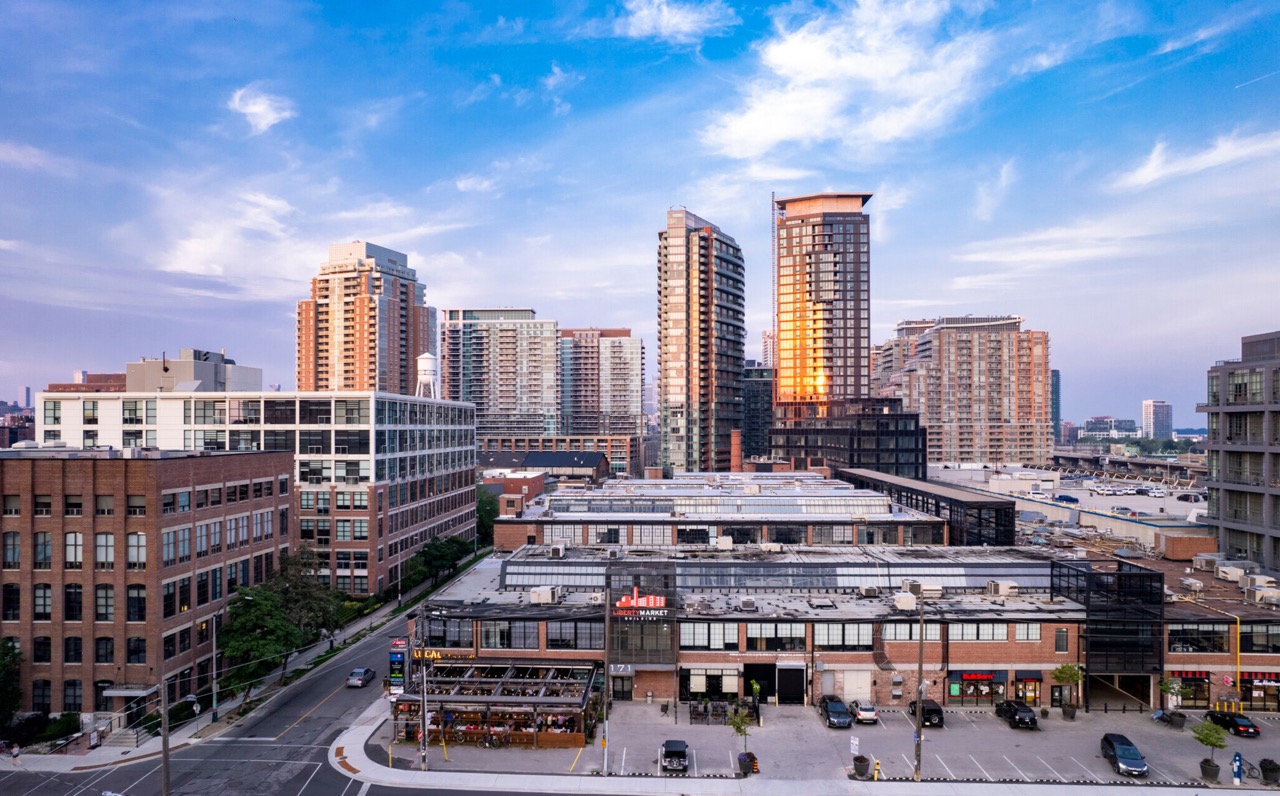
Toronto skyline and luxury high-rise buildings
03

Leasing

Helping landlords seamlessly lease residential and premium commercial spaces across the city.

Discover More
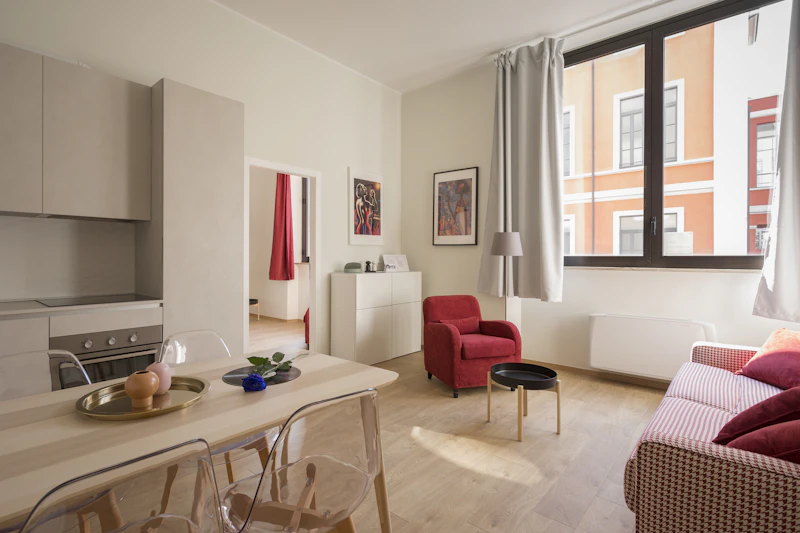
Beautifully staged modern apartment interior
04

Renting

Professional, dedicated support to help tenants secure top-tier properties across the GTA.

Discover More
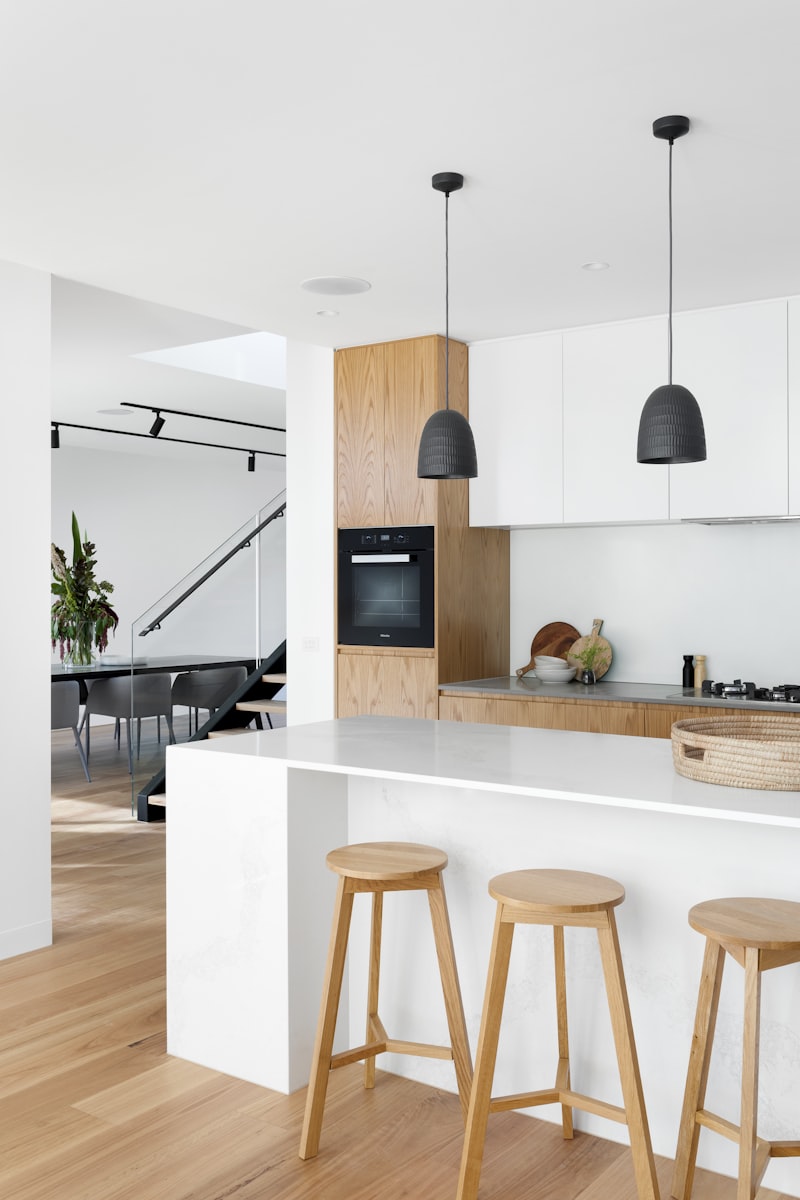
Sleek empty modern condo with floor to ceiling windows
05

Assignments

Specialized expertise navigating pre-construction and assignment sales safely and profitably.

Discover More
Explore Our Other Platforms
Swipe to explore

Ready to Find Your Dream Home?

Gain a competitive edge with our hyper-local expertise across the GTA. Let our downtown Toronto real estate agents provide the real-time insights and expert guidance you need for a stress-free home buying experience.

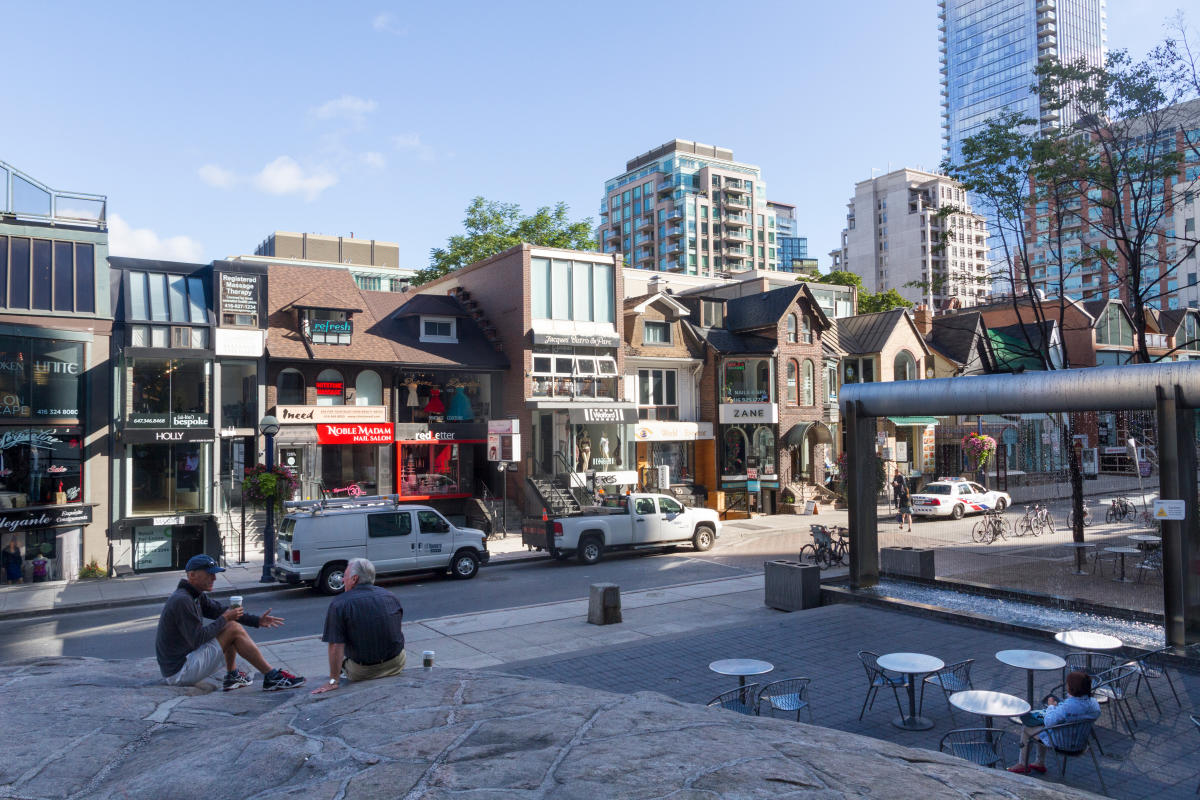
Toronto Skyline
Local Lifestyle

Experience Toronto Like a True Local

Explore →

Frequently Asked Questions (FAQ)

What areas does the RE/MAX Plus City Team serve?

While we are premier specialists in Downtown Toronto—including highly sought-after neighborhoods like Yorkville, Liberty Village, King West, and the Waterfront—our reach extends across the entire Greater Toronto Area (GTA). We actively help clients buy, sell, and lease in Mississauga, Vaughan, Oakville, Brampton, Hamilton, Richmond Hill, and beyond.

What sets the RE/MAX Plus City Team apart from other realtors?

What sets us apart is our comprehensive approach. We are more than just a real estate team — we are a unified group of professionals with diverse expertise, all dedicated to helping you. By offering a full range of services, we pair hyper-local knowledge with a vast regional reach. Successfully navigating the GTA market requires agents who genuinely understand the nuances of the area—from building-specific condo fees in the urban core to micro-market trends in suburban high-growth communities. We pride ourselves on clear communication, real-time insights, and a proven track record of top-tier results.

What real estate services do you provide?
  • Buying & Selling: Expert guidance for residential and premium commercial properties, complete with bespoke marketing strategies to maximize your property's value.
  • Leasing & Renting: Seamless services for both landlords and tenants, including property marketing, tenant screening, and securing top-tier units.
  • Specialized Services: We have dedicated expertise in Property Management, Home Staging, Power of Sale, and safely navigating Pre-Construction and Assignment Sales.
What do past clients say about working with the RE/MAX Plus City Team?

We are incredibly proud to have earned over 600 5-star Google reviews from our satisfied clients! Our track record reflects our team's commitment to clinical efficiency, deep market knowledge, and providing a stress-free experience for buyers, sellers, landlords, and tenants alike.

I am a landlord. How can you help me rent out my property?

With over 500 units leased in 2025, we are trusted leaders in GTA rental services. Our focus is entirely on protecting your investment. We prioritize long-term results and securing high-quality, reliable tenants, rather than just rushing to fill the unit. From strict tenant screening to asset protection, we ensure your investment is thoroughly looked after.

Where is your office located, and how can I get in touch?

Our main office is conveniently located right in the downtown core at 14B Harbour St, Toronto, ON, M5J 2Y4.

Do you offer access to Power of Sale properties?

Yes! We provide our clients with an exclusive resource to access and navigate Power of Sale listings. Purchasing a Power of Sale property can be a highly lucrative opportunity but involves a complex legal process. Our specialized team has the expertise to help you identify these unique properties and guide you safely through the transaction.

Do you offer tools on your website to help estimate my real estate costs?

We offer a suite of free online financial calculators directly on our website to help you plan your budget with confidence. You can use our Mortgage Calculator, CMHC Mortgage Insurance Calculator, and Land Transfer Tax Calculator to accurately anticipate your monthly payments and closing costs.

Do you offer home evaluations if I am thinking about selling?

Yes, we do! We provide a comprehensive and completely Free Home Evaluation to help you determine exactly what your property is worth in today's market. Whether you are actively looking to list or simply exploring your options for the future, our team will provide expert, data-driven insights to help you make an informed decision.

If you're saving for a first home in Toronto and haven't opened an FHSA yet, you're likely leaving real tax savings on the table. Here's how the account actually works, and how to use it properly alongside the rest of your down payment strategy.

What the FHSA Actually Does

The First Home Savings Account combines the best features of an RRSP and a TFSA: contributions are tax-deductible (like an RRSP), and qualifying withdrawals — including growth on your investments — are completely tax-free (like a TFSA). You can contribute up to $8,000 per year, up to a lifetime maximum of $40,000, and unused contribution room carries forward.

Why This Matters More Than It Might Sound

You get the deduction now. Contributing to an FHSA reduces your taxable income the same way an RRSP contribution does — a real, immediate tax benefit while you're saving.

You keep the growth tax-free. Unlike an RRSP, where withdrawals (even for a home purchase under the Home Buyers' Plan) are eventually taxed if not repaid on schedule, a qualifying FHSA withdrawal — contributions and any investment growth — comes out completely tax-free. You genuinely don't pay tax on either end.

You don't have to repay it. The RRSP Home Buyers' Plan requires you to repay what you withdrew over 15 years, or face it being added back to your taxable income. The FHSA has no repayment requirement at all.

How to Actually Use It Alongside Your Other Savings

The FHSA and the RRSP Home Buyers' Plan can both be used toward the same home purchase — they're not mutually exclusive. A common strategy:

  • Maximize your FHSA contributions first, given the combined deduction-plus-tax-free-withdrawal benefit is stronger than the Home Buyers' Plan alone.

  • Use RRSP Home Buyers' Plan withdrawals (up to the current limit) as an additional source of down payment funds, understanding you'll need to repay that portion over time.

  • Layer in a TFSA for any additional savings beyond what fits in your FHSA contribution room.

Who Actually Qualifies

To open an FHSA, you generally need to be a Canadian resident, at least 18 years old, and a first-time home buyer — meaning you (or your spouse) haven't owned a home you lived in during the current year or the four preceding calendar years. This "four year" rule is worth understanding carefully if you owned a home years ago but haven't in a while — you may still qualify.

What Counts as a Qualifying Withdrawal

To withdraw tax-free, you need a written agreement to buy or build a qualifying home, and you generally need to use the funds within a specific window and actually move into the home as your principal residence within a year of purchase or completion. If your plans change and you don't end up buying, you can transfer FHSA funds to an RRSP or RRIF without immediate tax consequences, rather than losing the benefit entirely.

How This Fits Into Your Total Toronto Closing Cost Picture

Your FHSA and Home Buyers' Plan funds address your down payment — but remember this is separate from other closing costs you'll need to budget for:

  • Land Transfer Tax — use our free calculator to see your exact number, including whether the first-time buyer rebate applies to you.

  • CMHC mortgage default insurance, if your down payment is under 20% — our calculator breaks this down.

  • Legal fees, inspection costs, and moving expenses — budget roughly an additional 3-4% of purchase price beyond your down payment itself.

The Bottom Line

The FHSA is genuinely one of the most powerful tools available to first-time Toronto buyers right now — tax-deductible in, tax-free out, no repayment requirement. If you're saving toward a purchase and haven't opened one, it's worth doing before your next contribution room resets.

Want to run your full numbers — FHSA, Home Buyers' Plan, Land Transfer Tax rebate, and closing costs — before you start house hunting? Contact our team for a complete first-time buyer breakdown.

This article is for general informational purposes and is not financial or tax advice. Consult a financial advisor or accountant for guidance specific to your situation.

Read

Every buying guide tells you to get pre-approved before you shop. What most don't explain is why the specific rules governing that pre-approval changed enough in 2026 that skipping this step — or doing it casually — costs Toronto buyers more than it used to.

The Stress Test, in Real Numbers

Every mortgage applicant in Canada has to qualify at the higher of their contracted rate plus 2%, or 5.25% — whichever number is bigger. So if your actual offered rate is 5.5%, the lender tests your ability to pay at 7.5%, not 5.5%. This isn't new in principle, but it means your approved purchase price and your comfortable purchase price can be meaningfully different numbers — a gap that catches buyers off guard when they assume their pre-approval amount is what they should actually spend.

What Changed for 2026

Two rule changes are worth knowing before you start shopping:

  • The insured mortgage price cap rose to $1.5 million. Previously capped lower, this shift opened up insured (lower down payment) financing to a meaningfully larger share of Toronto's housing stock, given the city's average price now sits just above $1 million.

  • 30-year insured amortizations are now available to eligible first-time buyers and buyers of new builds. Spreading your mortgage over 30 years instead of 25 lowers your monthly payment, which can be the difference between qualifying and not — though it also means paying more interest over the life of the loan.

Why Pre-Approval Should Come Before You Start Touring, Not After

It sets your real ceiling, not your hoped-for one. A pre-approval that includes a full look at your income, debts, credit, and down payment tells you what a lender will actually offer — often a very different number than what you assumed based on rent-to-mortgage comparisons alone.

It locks your rate for up to 120 days. If rates rise while you're shopping, you keep your locked rate. If they drop, most lenders will let you request the lower one — but that's not automatic, so ask your broker to confirm your lender's specific policy.

It signals seriousness to sellers. In multiple-offer situations — which are becoming more common again on well-priced freeholds — a firm financing pre-approval is often the difference between an offer that gets taken seriously and one that gets passed over.

A Pre-Approval Is Not a Guarantee

It's important to understand what pre-approval doesn't do: it doesn't guarantee final approval. The lender still needs to approve the specific property you're buying, and will re-verify your finances closer to closing. As long as your situation doesn't change significantly — no new debt, no job change, no credit drop — most pre-approvals convert to full approval without issue. But those "ifs" are exactly why financial discipline during your home search matters as much as the pre-approval itself.

Budgeting Beyond the Mortgage Payment

Getting pre-approved tells you your mortgage ceiling — it doesn't tell you your total closing cost picture. Toronto buyers specifically need to budget for:

  • Double Land Transfer Tax (provincial and municipal) — use our free calculator to see your exact number before you make an offer.

  • CMHC mortgage default insurance premiums, if your down payment is under 20% — our mortgage insurance calculator breaks this down.

  • Legal fees, home inspection, title insurance, and moving costs — a reasonable rule of thumb is budgeting an additional 3-4% of purchase price beyond your down payment.

What to Bring to Your Pre-Approval Appointment

  • Two years of tax returns or Notices of Assessment

  • Recent pay stubs and an employment letter (or 90 days of bank statements if self-employed)

  • Government-issued photo ID

  • Bank statements showing your available down payment funds

The Bottom Line

Pre-approval in 2026 isn't just a formality — with the stress test, the new $1.5 million insured cap, and 30-year amortization options all in play, the difference between a casual pre-approval and a properly done one can change your entire price range. Get this step right before you fall in love with a listing you may not actually be able to close on.

Ready to run your real numbers before you start touring? Try our mortgage and Land Transfer Tax calculators, or reach out to our team for a referral to a mortgage professional we trust.

This article is for general informational purposes and is not financial advice. Consult a licensed mortgage broker for guidance specific to your situation.

Read

If you're buying inside the City of Toronto, there's one closing cost that catches almost every out-of-town buyer off guard: you pay Land Transfer Tax twice. Here's exactly how it works, what you'll actually owe, and how the first-time buyer rebate can wipe most or all of it out.

Why Toronto Buyers Pay Double

Everywhere else in Ontario, you pay one Land Transfer Tax (LTT) to the province. Buy inside Toronto's city limits, and you also owe a separate Municipal Land Transfer Tax (MLTT) to the City. Both are calculated on a similar sliding scale based on purchase price, which is why Toronto closing costs run noticeably higher than a comparable purchase in Mississauga or Vaughan.

How the Tax Is Calculated

Both the provincial and municipal tax use marginal rate brackets — you pay a higher rate only on the portion of the price that falls into each bracket, similar to income tax. Rates increase in stages as purchase price rises, with the highest marginal rates applying to the portion of the price above $2 million (provincial) and above $3 million (municipal).

Rather than walk through every bracket here, the fastest way to see your exact number is our Toronto Land Transfer Tax Calculator — plug in your purchase price and it does the marginal-rate math for both levels instantly.

The First-Time Buyer Rebate

Both the province and the City offer a rebate for qualifying first-time buyers:

  • Provincial rebate: up to $4,000 off your provincial LTT.

  • Municipal rebate: up to $4,475 off your Toronto MLTT.

Combined, that's up to $8,475 back — enough to fully eliminate the LTT on a typical entry-level condo purchase, and to meaningfully offset it on a higher-priced home.

Who Qualifies

  • You must be a Canadian citizen or permanent resident.

  • You (and your spouse, if applicable) must never have owned a home, anywhere in the world, at any time.

  • You must occupy the home as your principal residence within 9 months of closing.

If you and your spouse are buying together and only one of you qualifies as a first-time buyer, you can still claim a partial rebate — don't assume you're automatically disqualified.

How the New 2026 HST Rebates Interact With This

If you're buying pre-construction or a newly built home, remember that LTT rebates are separate from the new federal and provincial HST rebates for first-time buyers we covered in our HST rebate guide. The two programs stack — you can claim both if you qualify for both — which is exactly why running your specific numbers with an expert matters more than reading a general guide.

What This Means If You're Buying a Power of Sale Property

One detail buyers chasing distressed deals often miss: Land Transfer Tax applies the same way on a power of sale purchase as it does on any other resale. If you're weighing a discounted property through Power of Sale Plus, budget for full LTT on the purchase price just as you would on a standard resale — the "deal" doesn't extend to your closing costs.

The Bottom Line

Toronto's double Land Transfer Tax is real, but the first-time buyer rebate is generous enough to erase it entirely for many entry-level purchases. Run your exact numbers before you budget your closing costs — guessing here is how buyers get caught short on closing day.

Want your exact Land Transfer Tax and rebate number before you make an offer? Use our free calculator or reach out to our team for a full closing-cost breakdown.

Read
This website may only be used by consumers that have a bona fide interest in the purchase, sale, or lease of real estate of the type being offered via the website. The data relating to real estate on this website comes in part from the MLS® Reciprocity program of the PropTx MLS®. The data is deemed reliable but is not guaranteed to be accurate.