



Get a Same-day Response from our Team

One of our member will follow up personally — usually within a few hours.

Homepage Query

Toronto Downtown & GTA Real Estate Experts

Based at 14B Harbour St, the RE/MAX Plus City team are your premier Toronto Downtown specialists with a reach that extends across the entire GTA. Whether you are searching for a luxury Waterfront condo, a King West loft, or a detached family home in Mississauga, Vaughan, or Oakville, our hyper-local expertise across the Greater Toronto Area provides a definitive competitive edge. Successfully navigating the urban core and suburban markets requires Downtown Toronto agents who understand building-specific fees and regional micro-market trends. From the high-end luxury of Yorkville to the high-growth communities in Richmond Hill and Liberty Village, we deliver real-time insights and proven results for buyers and sellers throughout Toronto and the GTA.

Toronto Real Estate Listings & GTA Homes for Sale

What Our Clients Say

Over 600 5-star Google reviews from buyers, sellers, landlords, and tenants across the GTA.

Expertise & Excellence

Full Service Real Estate Solutions

Luxury residential home exterior
01

Buying

Expert guidance to help you acquire premium real estate across Toronto and the Greater Toronto Area.

Discover More
Modern elegant living room interior
02

Selling

Sell your Toronto property with bespoke marketing strategies designed to achieve maximum value.

Discover More
Toronto skyline and luxury high-rise buildings
03

Leasing

Helping landlords seamlessly lease residential and premium commercial spaces across the city.

Discover More
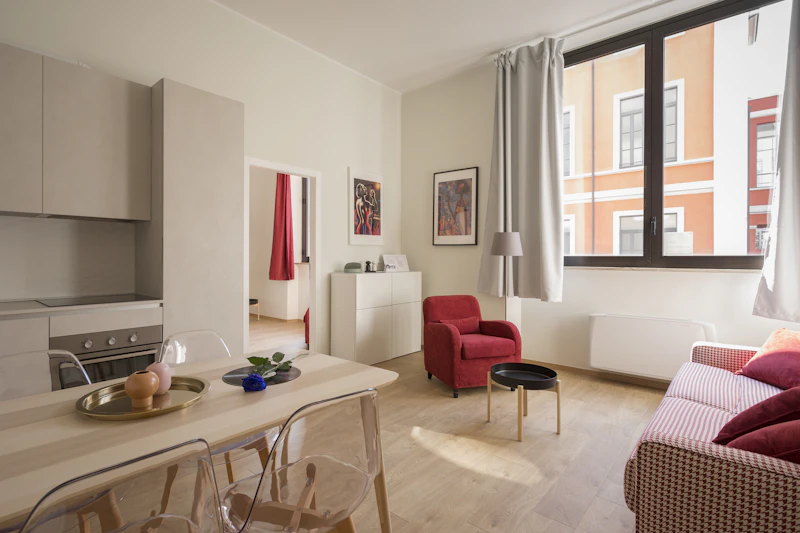
Beautifully staged modern apartment interior
04

Renting

Professional, dedicated support to help tenants secure top-tier properties across the GTA.

Discover More
Sleek empty modern condo with floor to ceiling windows
05

Assignments

Specialized expertise navigating pre-construction and assignment sales safely and profitably.

Discover More
Explore Our Other Platforms
Swipe to explore

Ready to Find Your Dream Home?

Gain a competitive edge with our hyper-local expertise across the GTA. Let our downtown Toronto real estate agents provide the real-time insights and expert guidance you need for a stress-free home buying experience.

Toronto Skyline
Local Lifestyle

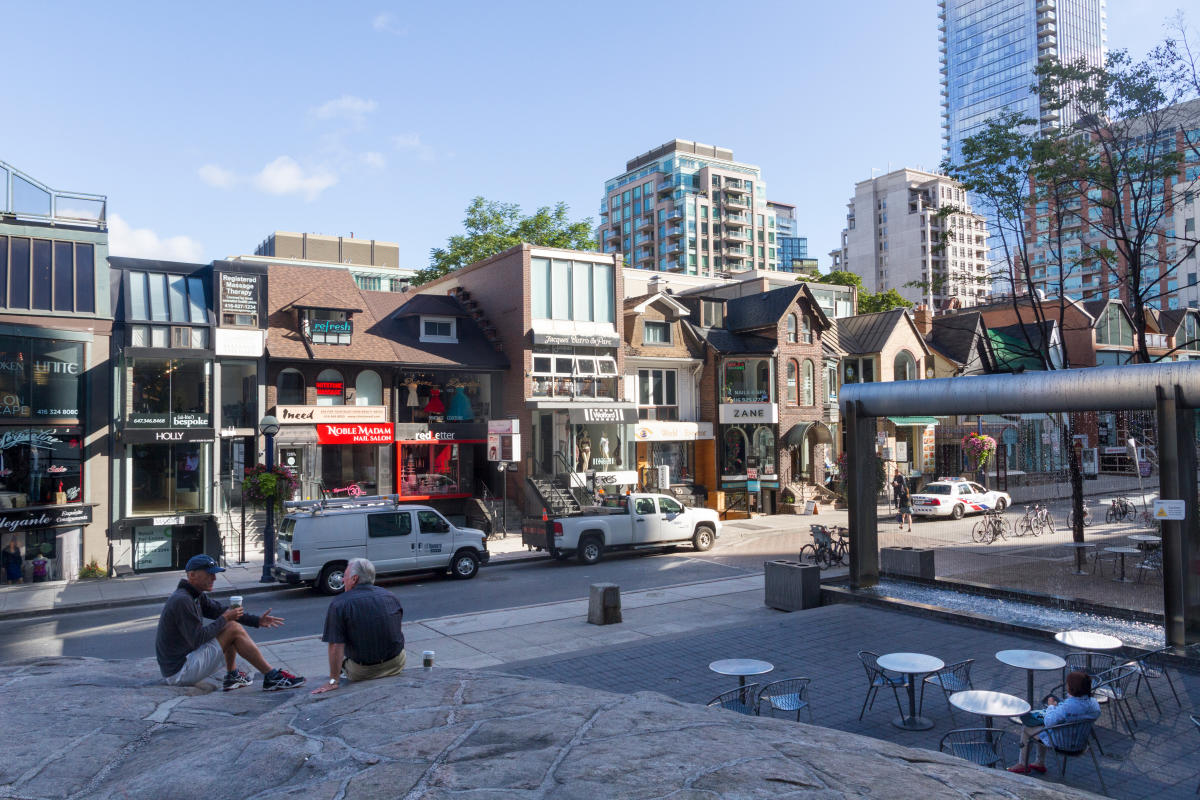
Experience Toronto Like a True Local

Explore →

Frequently Asked Questions (FAQ)

What areas does the RE/MAX Plus City Team serve?

While we are premier specialists in Downtown Toronto—including highly sought-after neighborhoods like Yorkville, Liberty Village, King West, and the Waterfront—our reach extends across the entire Greater Toronto Area (GTA). We actively help clients buy, sell, and lease in Mississauga, Vaughan, Oakville, Brampton, Hamilton, Richmond Hill, and beyond.

What sets the RE/MAX Plus City Team apart from other realtors?

What sets us apart is our comprehensive approach. We are more than just a real estate team — we are a unified group of professionals with diverse expertise, all dedicated to helping you. By offering a full range of services, we pair hyper-local knowledge with a vast regional reach. Successfully navigating the GTA market requires agents who genuinely understand the nuances of the area—from building-specific condo fees in the urban core to micro-market trends in suburban high-growth communities. We pride ourselves on clear communication, real-time insights, and a proven track record of top-tier results.

What real estate services do you provide?
  • Buying & Selling: Expert guidance for residential and premium commercial properties, complete with bespoke marketing strategies to maximize your property's value.
  • Leasing & Renting: Seamless services for both landlords and tenants, including property marketing, tenant screening, and securing top-tier units.
  • Specialized Services: We have dedicated expertise in Property Management, Home Staging, Power of Sale, and safely navigating Pre-Construction and Assignment Sales.
What do past clients say about working with the RE/MAX Plus City Team?

We are incredibly proud to have earned over 600 5-star Google reviews from our satisfied clients! Our track record reflects our team's commitment to clinical efficiency, deep market knowledge, and providing a stress-free experience for buyers, sellers, landlords, and tenants alike.

I am a landlord. How can you help me rent out my property?

With over 500 units leased in 2025, we are trusted leaders in GTA rental services. Our focus is entirely on protecting your investment. We prioritize long-term results and securing high-quality, reliable tenants, rather than just rushing to fill the unit. From strict tenant screening to asset protection, we ensure your investment is thoroughly looked after.

Where is your office located, and how can I get in touch?

Our main office is conveniently located right in the downtown core at 14B Harbour St, Toronto, ON, M5J 2Y4.

Do you offer access to Power of Sale properties?

Yes! We provide our clients with an exclusive resource to access and navigate Power of Sale listings. Purchasing a Power of Sale property can be a highly lucrative opportunity but involves a complex legal process. Our specialized team has the expertise to help you identify these unique properties and guide you safely through the transaction.

Do you offer tools on your website to help estimate my real estate costs?

We offer a suite of free online financial calculators directly on our website to help you plan your budget with confidence. You can use our Mortgage Calculator, CMHC Mortgage Insurance Calculator, and Land Transfer Tax Calculator to accurately anticipate your monthly payments and closing costs.

Do you offer home evaluations if I am thinking about selling?

Yes, we do! We provide a comprehensive and completely Free Home Evaluation to help you determine exactly what your property is worth in today's market. Whether you are actively looking to list or simply exploring your options for the future, our team will provide expert, data-driven insights to help you make an informed decision.

We mentioned the status certificate briefly in our GTA home buying guide — but it deserves a much closer look on its own, because it's genuinely one of the most important documents in any resale condo purchase, and one of the least understood.

What a Status Certificate Actually Is

A status certificate is a legally mandated package the condo corporation provides, disclosing the building's financial health, governance, and any outstanding legal or maintenance issues. Under Ontario's Condominium Act, the corporation must deliver it within 10 days of a written request and payment of the prescribed fee (capped at $100). Separately, your purchase agreement typically includes its own condition giving you — really, your lawyer — a review window after you actually receive the certificate, commonly 5 to 10 business days, to review it and decide whether to waive the condition or walk away.

What's Actually Inside

The certificate of insurance. Shows the condo corporation's current insurance policies — what's covered at the building level, which matters for understanding what you'll need to insure yourself.

Financial statements. The corporation's recent budget and financial statements, showing whether the building is running a surplus, a deficit, or right at break-even.

Reserve fund study and balance. This is one of the most important sections — it tells you how much money the building has set aside for major future repairs, and whether that amount is considered adequate relative to the building's age and expected capital needs.

Any pending or approved special assessments. If the corporation has already approved a lump-sum charge to owners for a major repair, it should be disclosed here — a critical detail that directly affects your real cost of ownership.

Outstanding litigation. Any lawsuits involving the corporation, which can signal deeper issues (construction defects, disputes with a former developer) worth understanding before you commit.

The governing documents. The declaration, by-laws, and rules — including the building's definition of a "standard unit," which determines what the corporation's insurance covers versus what you'd need to insure yourself.

Minutes from recent board and AGM meetings. Often overlooked, but genuinely useful — these can reveal issues being actively discussed that haven't yet made it into a formal financial disclosure.

Red Flags Worth Taking Seriously

  • A reserve fund that looks thin relative to the building's age. An older building with a reserve fund that hasn't grown proportionally is a genuine warning sign of future special assessments.

  • Multiple recent fee increases without a clear explanation. Can signal the corporation is playing catch-up on an underfunded reserve.

  • A high proportion of units in arrears on their maintenance fees. Affects the corporation's cash flow and can be an early indicator of broader financial stress in the building.

  • Ongoing litigation related to the building envelope or structural issues. Worth having your lawyer review closely, since the ultimate financial exposure isn't always clear from the certificate alone.

Why You Shouldn't Review This Yourself

A status certificate runs long and uses specific legal and accounting language that isn't always intuitive. Having your real estate lawyer review it — not just skim it — is standard practice for good reason: they know exactly which sections carry real risk and which are boilerplate.

What to Do If You Find a Red Flag

A red flag in the status certificate doesn't automatically mean walking away — it means negotiating from a position of full information. Depending on what you find, that might mean asking the seller to address a known issue before closing, negotiating price down to account for likely future costs, or in some cases, deciding the risk isn't one you want to take on.

The Bottom Line

The status certificate is the closest thing a condo purchase has to a financial health check on the entire building, not just the unit you're buying — treating this review as a formality rather than genuine due diligence is one of the more costly mistakes a condo buyer can make.

Buying a resale condo and want help understanding what a specific building's status certificate actually says? Contact our team — we review these regularly and know what to flag.

This article is for general informational purposes and is not legal advice. Have your real estate lawyer review any status certificate before waiving your condition.

Read

A listing description is marketing copy, not a home inspection report — and knowing how to read between the lines can save you a wasted showing, or help you spot something worth asking about before you fall in love with photos alone.

What Common Phrases Often Actually Mean

"Cozy" or "charming" — often signals a smaller space. Not necessarily a problem, but check the actual square footage rather than relying on the adjective.

"Great bones" or "full of potential" — usually means the property needs work, sometimes significant work. Go in expecting a renovation project, not a move-in-ready home.

"TLC needed" — a more direct version of the above. Budget for real repairs, not just cosmetic updates.

"Motivated seller" — can genuinely mean room to negotiate, but also worth asking your agent why the seller is motivated, since the reason sometimes matters (job relocation vs. a property issue they're trying to move quickly past).

"As-is" or "sold as-is" — a real signal to pay close attention to inspection findings, since the seller isn't committing to any repairs before closing.

None of these phrases are automatically red flags — they're just worth reading with a slightly more careful eye than the glossy photos might otherwise invite.

What to Look at Beyond the Description Itself

Days on market. A listing that's been active for a while, especially in a competitive area, is worth asking about. Sometimes it's simply overpriced; sometimes there's a specific reason worth understanding before you view it.

Price history, if available. Multiple price reductions can indicate the seller is adjusting expectations to match the market — useful context for how much room you might have to negotiate.

Listing photo gaps. If a listing shows every room except the basement, or skips exterior shots of one side of the house, it's worth asking why before you assume it's simply an oversight.

Square footage source. Listed square footage can come from MPAC records, a floor plan measurement, or a seller's own estimate — these aren't always consistent. If exact size matters to your decision, ask how the number was derived.

Questions Worth Asking Before You Book a Showing

  • Has the property had any recent renovations, and were permits pulled for them?

  • Why is the seller moving?

  • Are there any known issues the listing doesn't mention?

  • How long has this specific listing been active, and has the price changed?

Your agent can get straight answers to most of these before you spend time on a showing that isn't the right fit.

Why This Matters More in a Fast-Moving Market

When listings move quickly, it's tempting to book every showing that looks appealing in photos without doing this kind of quick read first. A few minutes spent reading a listing critically — not skeptically, just carefully — helps you prioritize your limited viewing time toward properties genuinely worth your attention.

The Bottom Line

A listing description is written to generate interest, which is a different job than giving you a complete picture of the property. Reading it with a slightly more analytical eye — and asking the right questions before you show up — helps you use your house-hunting time more effectively.

Looking at listings and want a second set of eyes before you book showings? Contact our team — we're happy to help you separate genuine opportunities from listings that just photograph well.

Read

RE/MAX Plus City Team Market Report: GTA Real Estate — August 2026

Each month we pull TRREB's latest numbers and break down what they actually mean for anyone buying, selling, or just watching the GTA market from the sidelines. August's data points to a market that's still soft on price, but visibly tightening underneath — a combination worth understanding before you make your next move.

August at a Glance

GTA REALTORS® reported 5,057 sales in August 2026, down just 2.1% from August 2025. New listings told a very different story, falling 14.1% year-over-year to 12,075, while active listings dropped 11.3% to 24,482. The average selling price landed at $993,410, down 2.7% from a year earlier, and the MLS® HPI Composite benchmark was down 4.5%.

Measured against July, sales eased about 15.4%, consistent with the usual summer slowdown, while the average price slipped roughly 1.0% month-over-month — a far smaller move than the year-over-year figures suggest, and a reminder that August's dip below $1 million says more about seasonal mix than about a market still in decline.

Why the Listings Gap Is the Real Headline

The story worth paying attention to isn't the sales number on its own — it's how much faster new listings and inventory are shrinking compared to sales. That gap means buyers in a given price range or neighbourhood are working with a narrower set of options than they were a year ago, and it's the first building block of a market that's approaching balance rather than staying firmly buyer-favoured.

It doesn't translate into immediate price growth. What it does is start building a floor under values, which historically precedes any turn toward renewed appreciation rather than following it.

Freehold Snapshot

Detached home sales held essentially flat year-over-year at +0.5%, and semi-detached sales edged up 0.9% — both signs that demand for family-sized freehold housing hasn't gone anywhere despite a quiet summer. Townhouse sales fell a more noticeable 9.5%.

Freehold remains the segment where sellers are regaining the most leverage, particularly in established, well-priced neighbourhoods.

Condo Snapshot

Condo apartment sales dipped 2.6% year-over-year, and price sensitivity here remains higher than in the freehold market. That continues to translate into real negotiating room for buyers — particularly first-time buyers, for whom condos remain the most accessible entry point into GTA ownership.

Why Aren't More Buyers Active Yet?

A fair question three-quarters through 2026 is why sales haven't picked up more, given how many of the usual conditions for stronger activity are already in place: prices well off their peak, mortgage rates holding steady, and affordability genuinely improved from two years ago.

The gap increasingly looks like a confidence issue rather than an affordability one. Uncertainty around trade policy, job security, and where borrowing costs head next is keeping otherwise-ready buyers on the sidelines. That demand hasn't disappeared — it's paused, waiting on clearer signals.

Under $1 Million: Context, Not Alarm

August marked the first time in a while the GTA average dipped below the $1-million mark, landing at $993,410. Given August is typically a slower month with fewer higher-end properties trading, this reflects seasonal mix more than a market still falling — a broader range of listings returning this fall makes a move back above $1 million reasonably likely.

The more meaningful shift may be in buyer mindset. As inventory tightens and prices show signs of stabilizing, the question a lot of buyers are asking is changing — from how much further values might drop, to what a property is likely to be worth a few years out. That's a materially different starting point for anyone weighing whether to buy now or keep waiting.

Looking Ahead

August behaved like a textbook seasonal slowdown, but the more important trend continued underneath it: sellers pulling back faster than buyers. If that keeps up, supply and demand should keep moving toward balance, laying the groundwork for price stabilization and, eventually, renewed appreciation.

If you're buying: freehold expect less room to negotiate than a year ago; condos and townhouses still offer real leverage.

If you're selling: accurate pricing matters more than ever in a market that's tightening but not yet turning, and detached/semi-detached sellers hold the strongest position right now.

Want a read on how this applies to your specific neighbourhood or price point? Contact our team for a current conversation, or run your own numbers with our Land Transfer Tax calculator and mortgage calculator.

Watching the power of sale segment specifically as the market firms up? Our sister site Power of Sale Plus tracks those opportunities across the GTA.

This report reflects TRREB's August 2026 Market Watch data and general market commentary. It is for informational purposes only and is not financial or investment advice.

Read
This website may only be used by consumers that have a bona fide interest in the purchase, sale, or lease of real estate of the type being offered via the website. The data relating to real estate on this website comes in part from the MLS® Reciprocity program of the PropTx MLS®. The data is deemed reliable but is not guaranteed to be accurate.